
Tzu Chi Adelaide Origins
From one seed of compassion to lasting impact

Your content goes here. Edit or remove this text inline or in the module Content settings. You can also style every aspect of this content in the module Design settings and even apply custom CSS to this text in the module Advanced settings.
Tzu Chi Adelaide: How a Seed Carried Across the Sea Became a Grove
In 1998, Tzu Chi did not yet exist in Adelaide. Whenever an urgent case arrived from Sydney, one woman would go: Lai-fa Elliott, newly settled in South Australia after emigrating from Taitung, Taiwan. She had been preparing to receive her Tzu Chi certification in Taiwan the very year her family moved abroad. The certificate remained on the far side of the ocean; the work did not. For years, she was the earliest and steadiest Tzu Chi presence in a state that had no Tzu Chi organisation at all.
South Australia had a substantial Chinese-Australian community but no Tzu Chi office, no local team and no regular gatherings. There was one volunteer and a telephone: Sydney identified cases; she visited families, listened, and reported back. Beginnings often look like this—quiet, simple, almost invisible—before they become anything recognisable.
A patient from Malaysia, and a city that started paying attention
In 2009 the seed found its opening. Mahadi, a Malaysian man living with a rare giant neurofibroma, travelled to the Royal Adelaide Hospital for reconstructive surgery, arranged through volunteers working in relay between Malaysia and Australia. The cross-border medical case was led by Ji Ya-Ying, the CEO of Tzu Chi's Sydney branch, and drew significant local attention. For many in Adelaide, it was the first concrete answer to the question: What Tzu Chi actually do?
One man's face was rebuilt, and a city's understanding of an organisation changed with it. Many of the volunteers who later joined first heard of Tzu Chi through this case.
One family and one living room
Through Mahadi's case, Wang Wei-Yu, then president of the Taiwanese Association, was invited to participate. He brought his family with him. His son Wang Chun Yao and daughter in law Liao Min Cheng soon took on responsibilities, and in 2013 the entire family received certification—becoming a pillar of the local mission.
In 2011 Lin Mei-Lan, also from Taiwan, moved to Adelaide to accompany her child’s schooling. She intended to keep a low-profile. The 11 March 2011 Japan earthquake and tsunami, and a vow spoken aloud by her son, changed that. She invited Wang Chun-Yao, already registered as a local volunteer through Sydney, along with volunteers Weng Li-Chu, Mindy and Lai Su-Tien, to collect donations on the street. The response proved that goodwill in Adelaide had been waiting for a place to land.
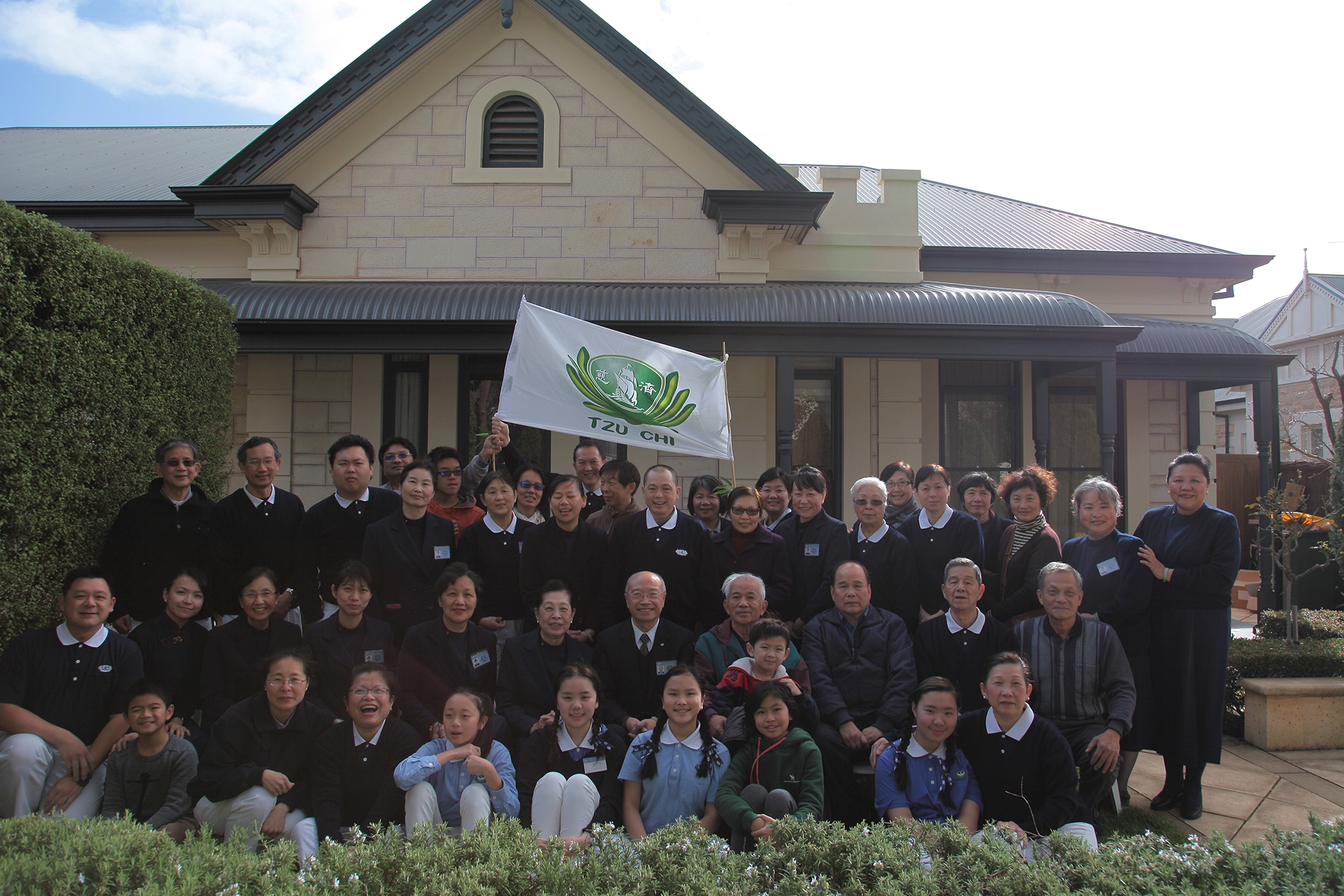
In March 2012, witnessed by volunteers from Sydney, Melbourne and Taiwan, an Adelaide contact point was formally established. In the early years Lin Mei-Lan opened her home and used her living room as the meeting place. In December 2013 the first cohort of 12 local volunteers travelled to Taiwan for certification.
September 2015: a former church, and a permanent home
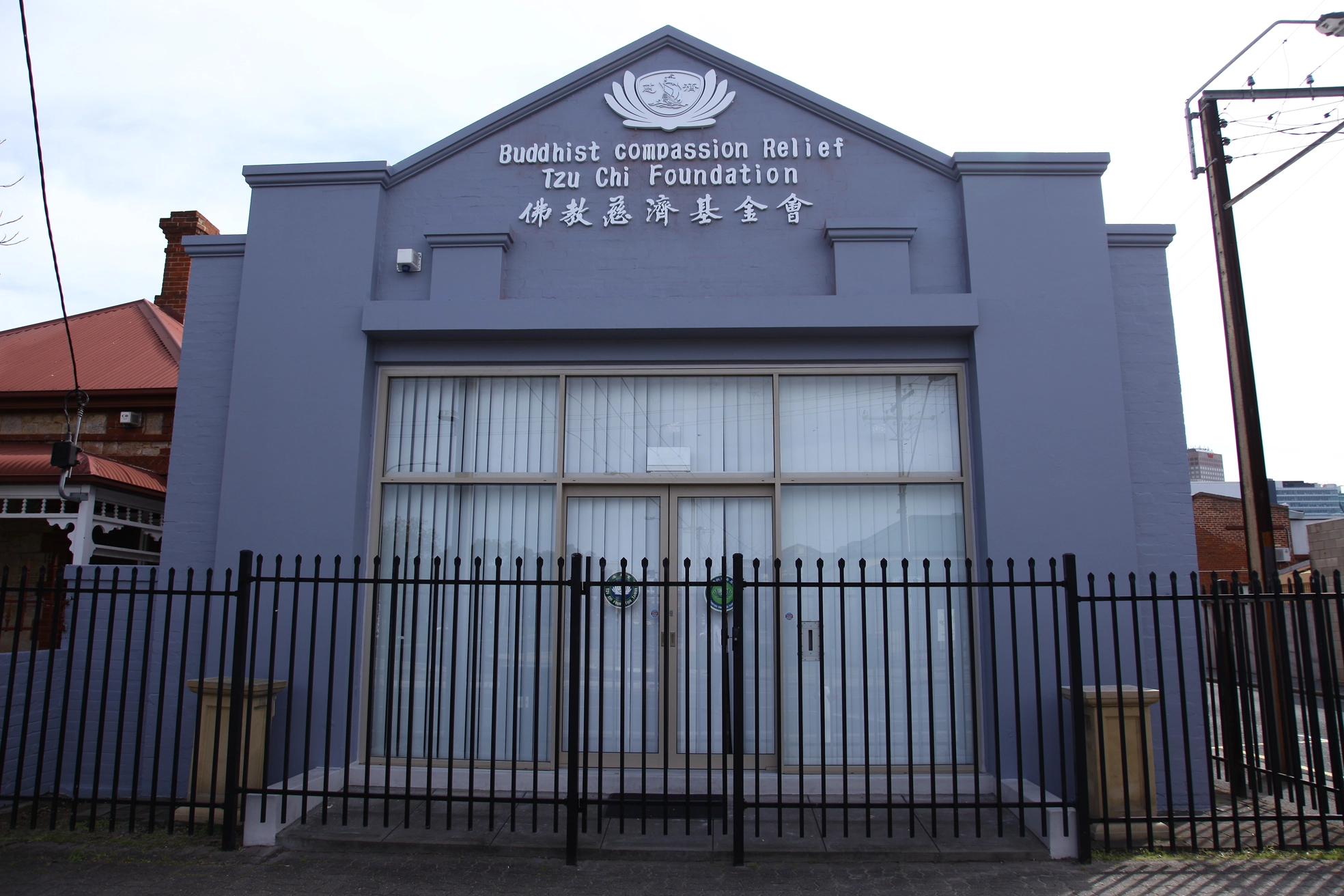
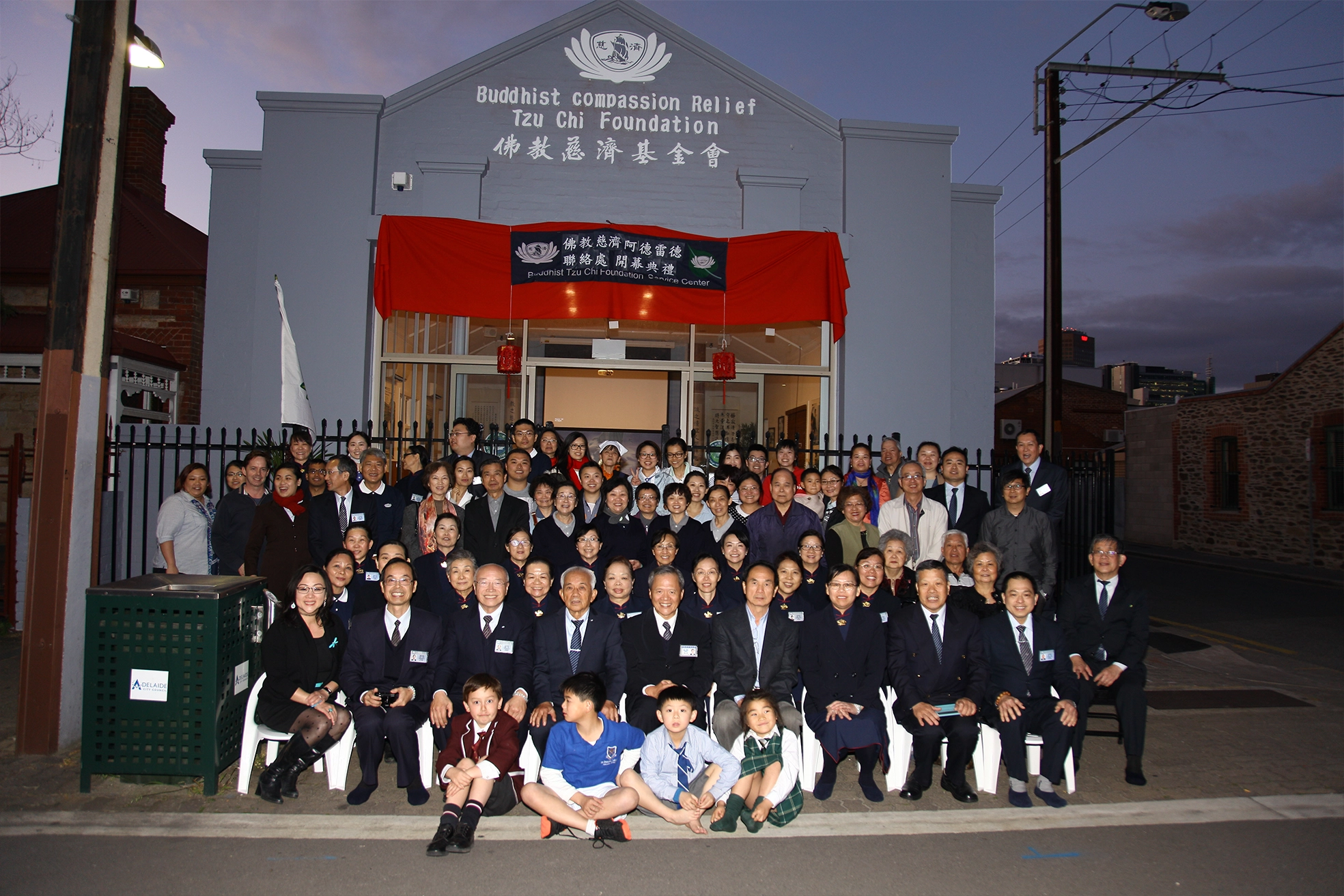
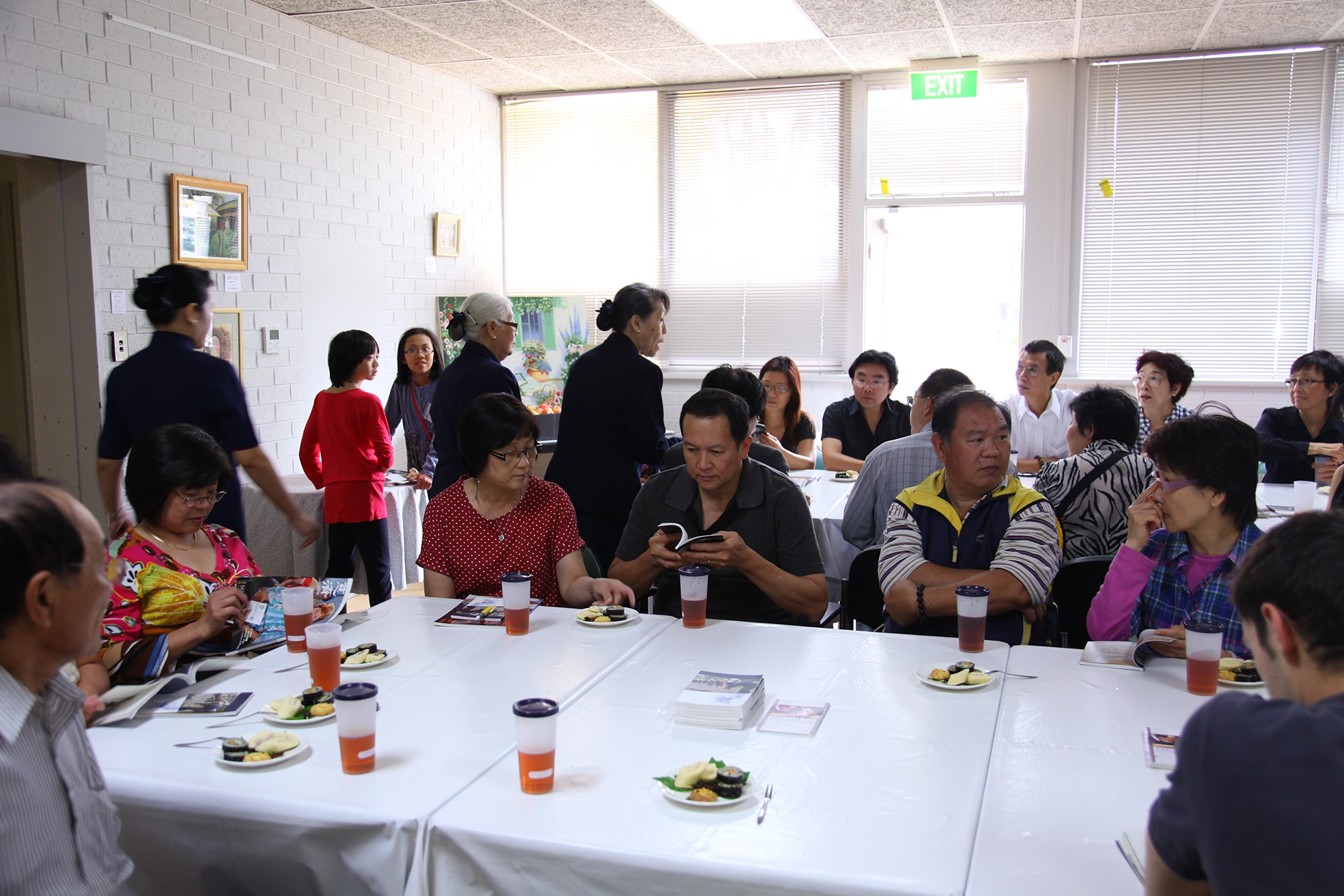
As the work grew, Wang Wei-Yu resolved that Tzu Chi volunteers in South Australia should have a home of their own. He secured a converted former church building. In September 2015 the Tzu Chi Adelaide Office was formally named and opened, with the naming bestowed by Dharma Master Cheng Yen, founder of the Tzu Chi Foundation, and witnessed by a blessing delegation led by Hsieh Chin Kuei, Director of the Religious Affairs Office in Taiwan. A fixed address is not a small thing. It is where training happens, where meals are prepared, where rosters are set. Belonging often begins with a street number.
After the fires, ten minutes in Parliament
When severe bushfires struck South Australia, Tzu Chi volunteers mobilised immediately. They raised funds on the street within days and entered the fire grounds to distribute relief supplies and provide follow-up care.
Their work drew attention of South Australian public figures. The Honourable Tung Ngo MLC expressed his admiration for Tzu Chi publicly, and The Honourable Senator Andrew McLachlan CSC delivered a ten-minute speech in the Australian Federal Parliament on 16 February 2021 recognising Tzu Chi's contribution to the nation.
Ten minutes in Parliament is the sum of countless distributions and countless home visits.
Passing the light on
In 2020 Lin Mei-Lan completed her term as coordinator and passed the responsibility to Yong Show-Fun, who leads Tzu Chi Adelaide today. Under his stewardship, volunteer numbers have grown to 87, and programs have become more systematic and far reaching.
What conditions converge to make
Seen as a whole, the history of Tzu Chi Adelaide was not created by a single decision. It was built from a long chain of people willing to show up: Lai-fa Elliott’s quiet persistence, Ji Ya-Ying’s medical relief leadership, Lin Mei Lan’s stewardship, the unwavering support of the Wang family, and Yong Show Fun continuation of the work.
A seed carried ten thousand miles by the people who moved here has grown into a grove in South Australia. The next stretch of the road will be walked the same way it always has been: one person at a time, deciding to go.
A patient from Malaysia, and a city that started paying attention
In 2009 the seed found its opening. Mahadi, a Malaysian man living with a rare giant neurofibroma, travelled to the Royal Adelaide Hospital for reconstructive surgery, arranged through volunteers working in relay between Malaysia and Australia. The cross-border medical case was led by Ji Ya-Ying, the CEO of Tzu Chi's Sydney branch, and drew significant local attention. For many in Adelaide, it was the first concrete answer to the question: What Tzu Chi actually do?
One man's face was rebuilt, and a city's understanding of an organisation changed with it. Many of the volunteers who later joined first heard of Tzu Chi through this case.
One family and one living room
Through Mahadi's case, Wang Wei-Yu, then president of the Taiwanese Association, was invited to participate. He brought his family with him. His son Wang Chun Yao and daughter in law Liao Min Cheng soon took on responsibilities, and in 2013 the entire family received certification—becoming a pillar of the local mission.
In 2011 Lin Mei-Lan, also from Taiwan, moved to Adelaide to accompany her child’s schooling. She intended to keep a low-profile. The 11 March 2011 Japan earthquake and tsunami, and a vow spoken aloud by her son, changed that. She invited Wang Chun-Yao, already registered as a local volunteer through Sydney, along with volunteers Weng Li-Chu, Mindy and Lai Su-Tien, to collect donations on the street. The response proved that goodwill in Adelaide had been waiting for a place to land.
In March 2012, witnessed by volunteers from Sydney, Melbourne and Taiwan, an Adelaide contact point was formally established. In the early years Lin Mei-Lan opened her home and used her living room as the meeting place. In December 2013 the first cohort of 12 local volunteers travelled to Taiwan for certification.
September 2015: a former church, and a permanent home
As the work grew, Wang Wei-Yu resolved that Tzu Chi volunteers in South Australia should have a home of their own. He secured a converted former church building. In September 2015 the Tzu Chi Adelaide Office was formally named and opened, with the naming bestowed by Dharma Master Cheng Yen, founder of the Tzu Chi Foundation, and witnessed by a blessing delegation led by Hsieh Chin Kuei, Director of the Religious Affairs Office in Taiwan. A fixed address is not a small thing. It is where training happens, where meals are prepared, where rosters are set. Belonging often begins with a street number.
After the fires, ten minutes in Parliament
When severe bushfires struck South Australia, Tzu Chi volunteers mobilised immediately. They raised funds on the street within days and entered the fire grounds to distribute relief supplies and provide follow-up care.
Their work drew attention of South Australian public figures. The Honourable Tung Ngo MLC expressed his admiration for Tzu Chi publicly, and The Honourable Senator Andrew McLachlan CSC delivered a ten-minute speech in the Australian Federal Parliament on 16 February 2021 recognising Tzu Chi's contribution to the nation.
Ten minutes in Parliament is the sum of countless distributions and countless home visits.
Passing the light on
In 2020 Lin Mei-Lan completed her term as coordinator and passed the responsibility to Yong Show-Fun, who leads Tzu Chi Adelaide today. Under his stewardship, volunteer numbers have grown to 87, and programs have become more systematic and far reaching.
What conditions converge to make
Seen as a whole, the history of Tzu Chi Adelaide was not created by a single decision. It was built from a long chain of people willing to show up: Lai-fa Elliott’s quiet persistence, Ji Ya-Ying’s medical relief leadership, Lin Mei Lan’s stewardship, the unwavering support of the Wang family, and Yong Show Fun continuation of the work.
A seed carried ten thousand miles by the people who moved here has grown into a grove in South Australia. The next stretch of the road will be walked the same way it always has been: one person at a time, deciding to go.